Oscar Rosmano on Lisbon's Club Culture, Temple Club and Protecting Underground Nightlife

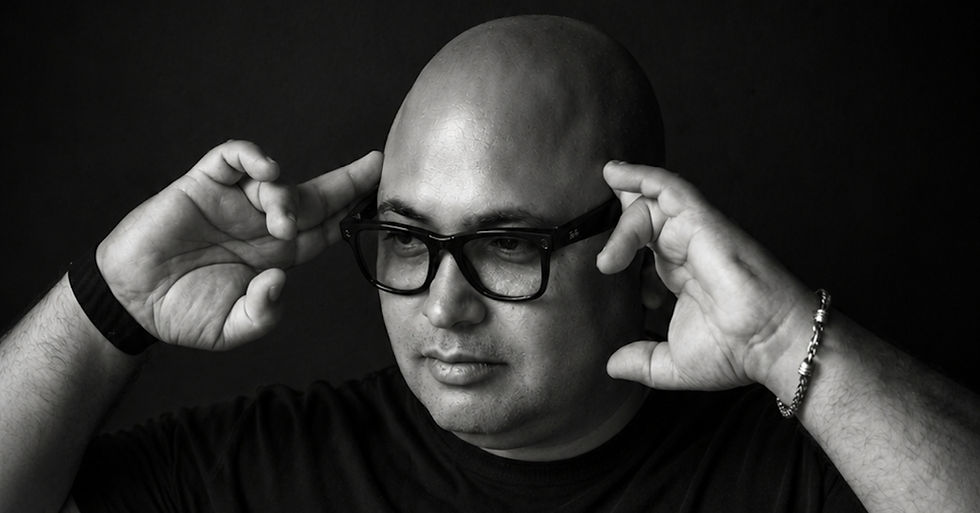
More than 25 years into his journey through electronic music, Oscar Rosmano has experienced the industry from almost every possible angle.
The Portuguese-Mexican artist has built a career as a DJ, producer, promoter and venue owner, sharing line-ups with artists including Hernan Cattaneo, Guy J, Dave Seaman and Danny Howells while continuing to release on labels such as Manual Music and Polyptych. Away from the studio, he also oversees Temple Club, one of Lisbon's most important homes for underground electronic music. That combination gives him a perspective few artists possess, balancing creativity with the realities of keeping independent nightlife alive.
Looking back across two decades, the biggest shift he sees isn't musical.
"The biggest change has definitely been the speed at which everything happens," he explains. "When I started, discovering music was part of the journey. You had to search for records, wait for imports, buy vinyl or CDs and really invest time into building your sound. Today everything is immediate."
Technology has opened doors for a new generation of artists, but Rosmano believes something valuable has been lost alongside that convenience.
"I think what today's generation often takes for granted is access. Access to music, technology, audiences and opportunities. The tools are there for everyone now, which is amazing, but sometimes people forget the value of time, experience and building something slowly."
He believes the same can be said for nightlife itself. Clubs once sat at the centre of electronic music culture, surrounded by a sense of mystery that has gradually been diluted by the rise of festivals and changing nightlife habits. Those experiences became the foundation for Temple Club, the venue he now calls home.
"My vision with Temple Club was always to recreate what made me fall in love with nightlife in the first place," he says. "The magic, the unpredictability, the feeling that anything could happen during a night out."
"I wanted to build a place people genuinely wanted to go to, not only because of who was playing, but because the venue itself had an identity and a feeling of its own."
Maintaining that identity, however, has become increasingly difficult.
Running an independent club in 2026 means balancing artistic ambition against rising artist fees, increasing operational costs and changing audience behaviour. While Temple remains rooted in progressive house, house and techno, Rosmano admits flexibility has become essential for survival.
"DJs are more expensive, people consume less at the bar and nightlife economics have changed a lot," he says. "The challenge is doing that without losing quality or identity."
Those pressures extend far beyond Temple's walls.
Rosmano believes independent venues across Europe are fighting an increasingly difficult battle against bureaucracy, redevelopment and short-term urban planning. Lisbon, he argues, has become a clear example of that shift, with neighbourhoods transformed by tourism and overseas investment.
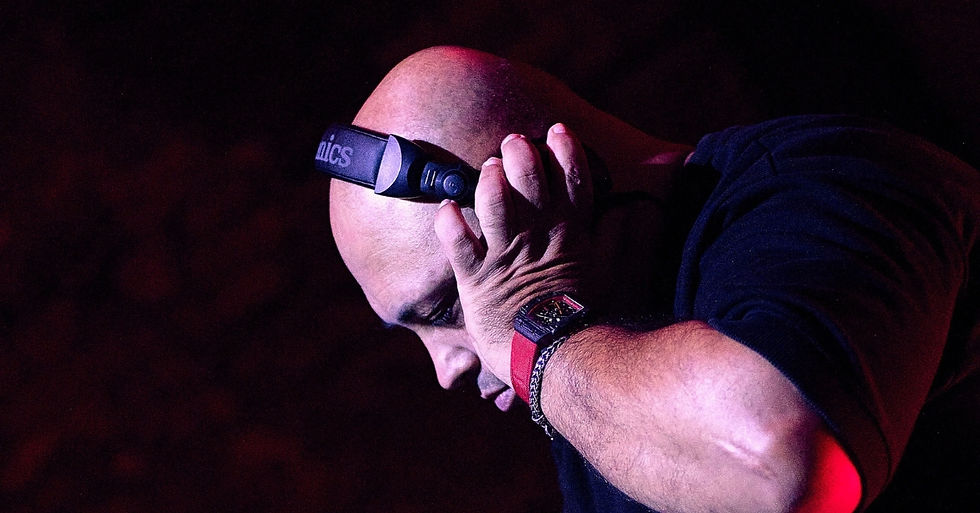
He points to the closure of legendary venue Kremilin as a reminder of how fragile club culture has become.
"Clubs are not just businesses," he says. "They are cultural spaces, creative incubators and part of a city's identity. Once these spaces disappear, they rarely come back."
For Rosmano, protecting nightlife should sit alongside protecting a city's cultural heritage. Without venues willing to support underground music, future generations of artists lose somewhere to develop both creatively and professionally.
Owning Temple has also changed the way he thinks about music itself.
Watching dancefloors week after week has given him a different understanding of what makes records connect. Rather than analysing productions from behind a laptop, he studies how crowds react throughout an entire evening, observing when people engage, when energy shifts and when moments become memorable.
"When I'm in the studio, certain sounds, grooves or atmospheres immediately transport me back to the Temple dancefloor," he says. "I start imagining how people would respond."
That direct relationship between club and studio continues to shape his productions, while reinforcing the idea that there is always something new to learn from every DJ who steps into the booth.
Throughout his career, Rosmano has shared stages with some of progressive house's defining names, but says the biggest lessons rarely came from technical ability alone.

He first met Hernan Cattaneo more than two decades ago and Guy J around fifteen years ago, before either reached their current stature. More recently, Temple has welcomed Quivver, Anthony Pappa, Dave Seaman and Danny Howells, artists whose careers have spanned more than three decades.
"What impressed me most wasn't only the music," he says. "It was how humble, attentive and respectful they all remained."
That humility stands in stark contrast to parts of today's industry, where rapid success through social media can sometimes create unrealistic expectations.
"This industry changes very fast," he says. "That's why I believe it's important to stay humble, keep learning and keep your feet firmly on the ground."
One experience, in particular, continues to stay with him.
Following a difficult night at Temple, where several major Lisbon events competed for audiences, Danny Howells noticed attendance was lower than expected and asked whether Rosmano needed him to return part of his fee.
"For me, that said everything," Rosmano recalls. "After thirty years at the top, he still understood the reality of the promoter's side."
Alongside Temple, Rosmano continues developing as a producer, although he openly admits he still considers DJing his strongest discipline.
"Production is a newer chapter for me and I'm still learning every day," he says. "But maybe that's exactly what keeps me hungry."

Running both sides of the industry has also reinforced his belief that artists benefit enormously from understanding what happens behind the scenes.
Promoting events, managing venues and taking financial risks all create a broader perspective that extends far beyond performing for an hour or two behind the decks. Those experiences, he believes, ultimately produce better artists because they create greater empathy for everyone involved in making a night happen.
Looking ahead, Rosmano's ambitions remain remarkably straightforward.
He wants to secure Temple's long-term future, continue improving as a producer and spend more time travelling as a DJ once again.
"For me, the next chapter is about balance," he says. "Protecting Temple, growing as an artist and reconnecting with that freedom of simply being a DJ again."
In an industry increasingly driven by algorithms, visibility and constant acceleration, Rosmano's philosophy feels refreshingly uncomplicated.
"Music first."


